2026-10-19 ·
Mold Remediation Process For Mount Juliet Drywall Removal
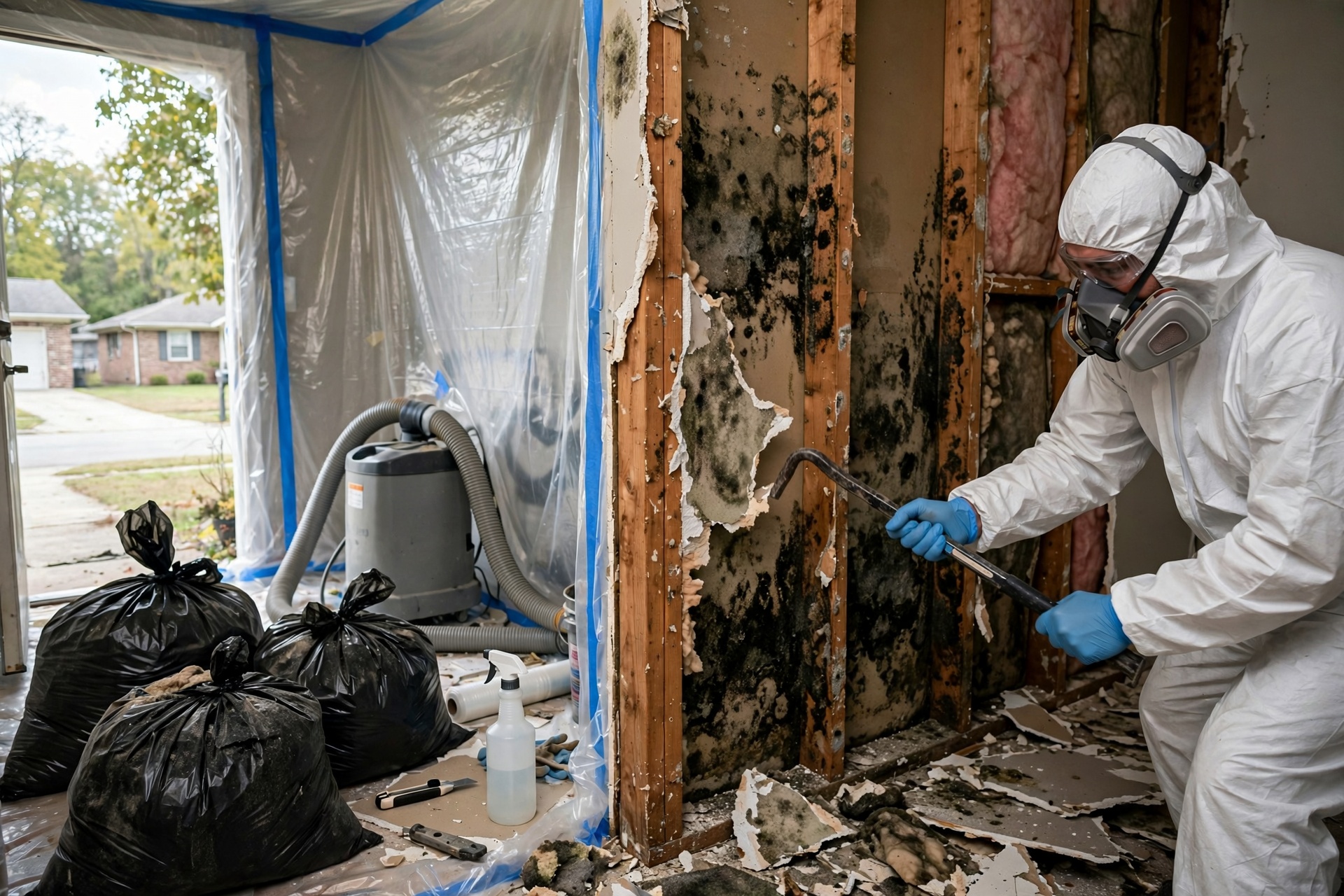
The mold remediation process for drywall removal in Mount Juliet typically requires removing affected sections 18–24 inches beyond visible growth or water stains, with full containment and HEPA filtration taking 2–5 days depending on square footage and access. This approach prevents spore migration into living spaces while addressing the root moisture source before reinstallation.
Initial Assessment and Containment
Technicians begin by mapping moisture with infrared cameras and moisture meters to identify hidden drywall saturation behind baseboards or in corners. In homes throughout Providence and Beckwith, this step often reveals leaks from roof valleys or plumbing penetrations common in 1990s–2000s construction. Containment uses 6-mil poly sheeting sealed with tape and negative air machines rated at 500–1,000 CFM to create pressure differentials. Workers wear full PPE including respirators rated for microbial particulates. This setup isolates the work zone from HVAC returns, which are frequent in single-story ranch homes near Charlie Daniels Park. Proper containment stops cross-contamination into adjacent rooms or attics, a frequent issue when mild winters allow undetected leaks to persist until hot summers spike indoor humidity.
Drywall Removal Techniques
Once contained, crews cut out damaged drywall using oscillating tools set to controlled depths to avoid disturbing insulation or wiring. Sections are bagged immediately in 6-mil liners and removed through exterior exits to limit indoor transport. In Beckwith properties with slab-on-grade foundations, crews pay extra attention to bottom plates where capillary moisture from Wilson County soils travels upward. All removed material is disposed of as construction waste at approved Wilson County facilities. The process includes labeling each bag with room location for documentation. This methodical removal pairs directly with mold-damaged drywall removal protocols that ensure no viable mold remains on exposed studs or sheathing.
Cleaning, Drying, and Moisture Control
After drywall extraction, exposed framing receives HEPA vacuuming followed by antimicrobial application on non-porous surfaces only. Industrial dehumidifiers rated for 70–100 pints per day run continuously alongside air movers until moisture content drops below 12 percent on wood and 1 percent on concrete. Mount Juliet’s humid subtropical pattern—with hot summers pushing relative humidity above 70 percent—makes this drying phase critical to avoid re-growth within 48 hours. Technicians often install temporary exhaust fans venting to exterior walls facing Providence Marketplace. For ongoing protection, homeowners are directed to moisture control after mold removal strategies such as sealing crawl space vents and maintaining 45–50 percent indoor humidity year-round.
Climate and Housing Factors in Wilson County
Mount Juliet’s location between Nashville and Lebanon means many homes in Providence experience poor attic ventilation combined with summer heat that drives condensation on cooler drywall surfaces. Mild winters allow groundwater to remain elevated, increasing basement and crawl space risks in Beckwith. These conditions make post-removal verification with moisture meters and follow-up mold inspection essential before new drywall installation. Crews also check HVAC systems for upstream mold that could re-contaminate fresh materials, linking directly to post-water-damage mold remediation when storms or plumbing failures are involved. Understanding these local patterns helps crews anticipate hidden growth behind vinyl wall coverings or in closets near exterior walls.