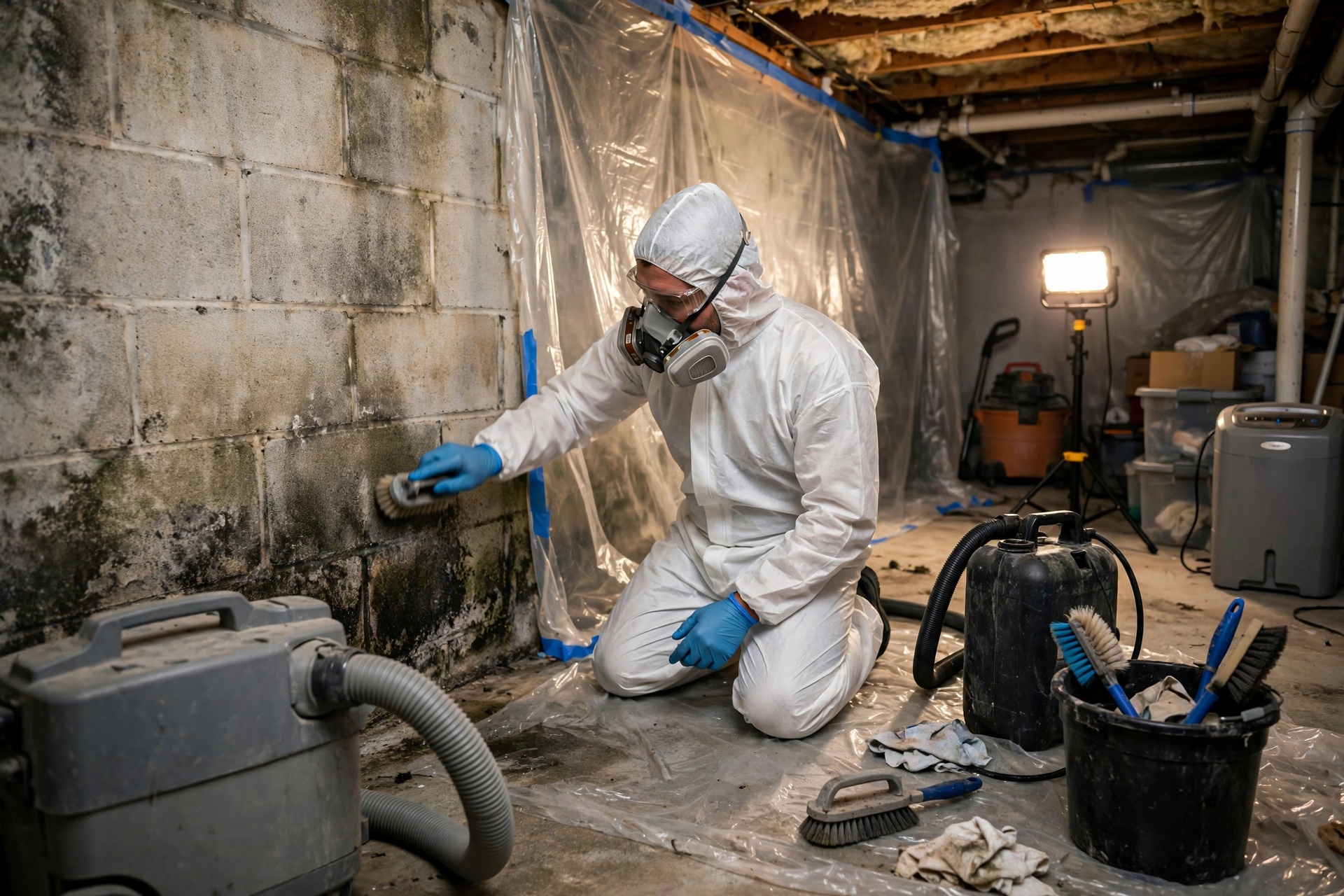
Basements in Mount Juliet homes, especially those built before the 1990s in Beckwith and near Providence Marketplace, often trap moisture from the area's humid subtropical climate. Hot summers drive condensation along concrete walls while mild winters keep soil damp around foundations near Charlie Daniels Park. This leads to mold growth on drywall, insulation, and wooden joists that homeowners miss until odors reach the main floor. Proper removal requires isolating the space, HEPA filtration, and addressing hidden pockets behind finished walls without disturbing load-bearing elements common in Wilson County construction.
Water intrusion from heavy summer storms or poor grading around properties in Providence frequently feeds basement mold colonies. Local terrain with clay-heavy soils holds water against foundations longer than sandy areas near Lebanon, extending drying times. Technicians must map moisture levels with meters before any demolition and use negative air machines to prevent spores from migrating upstairs. Skipping these steps risks cross-contamination into living areas that share HVAC ducts with the basement.
After physical removal, dehumidifiers sized for the square footage run until relative humidity stays below 50 percent for several days. This prevents regrowth during the humid months typical between May and September. Homes close to Nashville often have finished basements used as living space, requiring extra care to restore drywall seams and flooring without visible repair lines. Final clearance testing confirms spore counts match outdoor levels before any reconstruction begins.
Technician insight
In Mount Juliet, the thing that catches most people out with basement mold removal is how clay soil around Beckwith foundations holds water against older concrete walls long after rain stops. That slow release keeps humidity high enough for regrowth even after visible mold is gone unless drying runs for extra days.
Beckwith Home Hidden Growth
A homeowner in Beckwith noticed musty smells after summer storms but no visible mold on the main floor. Inspection found growth behind finished drywall in the 1970s basement near the foundation. We isolated the space, removed affected sections, dried the clay-influenced soil perimeter, and cleared the air before any rebuild.
Basement Mold Removal Services We Offer
✓Basement Moisture Mapping
Pinpoint hidden water sources in Wilson County basements using thermal imaging and moisture meters before any removal work starts.
✓Containment Barrier Installation
Set up sealed plastic barriers and negative air pressure to keep mold spores from spreading to Providence or Beckwith living areas during remediation.
✓HEPA Vacuum and Wipe Down
Remove surface mold from concrete, wood, and non-porous materials followed by antimicrobial treatment suited to humid Tennessee conditions.
✓Insulation and Drywall Removal
Cut out and dispose of contaminated porous materials in older Mount Juliet basements while protecting structural framing from further damage.
✓Post Remediation Drying
Run commercial dehumidifiers and air movers until moisture levels stabilize, preventing quick regrowth during hot summer humidity.
✓Clearance Air Sampling
Collect and analyze air samples after work to verify basement spore counts match outdoor levels before homeowners re-enter the space.
Basement Mold Removal Cost in Mount Juliet, TN
| Service | Typical Range | What Affects It |
|---|---|---|
| Small localized basement spot | $800–$1,600 | Limited to one wall section under 100 sq ft with no finished surfaces. |
| Full unfinished basement | $2,200–$4,500 | Includes drying equipment for typical Wilson County humidity load. |
| Finished basement with drywall removal | $3,800–$7,200 | Higher end when multiple rooms and insulation require disposal. |
| Clearance testing add-on | $250–$450 | Independent lab samples after remediation completes. |
Ranges are typical for Mount Juliet, TN and confirmed with an exact written quote before any work starts.
How it works
- 1
Initial Inspection
Assess the basement for visible mold, odors, and moisture sources using meters and cameras while noting any finished areas common in Providence homes.
- 2
Containment Setup
Install plastic sheeting and negative air machines to isolate the work zone from the rest of the Mount Juliet house.
- 3
Removal And Cleaning
Remove affected materials, HEPA vacuum surfaces, and apply treatments suited to Wilson County humidity levels.
- 4
Drying And Verification
Dry the space thoroughly then perform air sampling to confirm the job meets clearance standards before reconstruction.
Pricing
Pricing varies by square footage affected, depth of hidden growth, and whether finished walls must be opened.