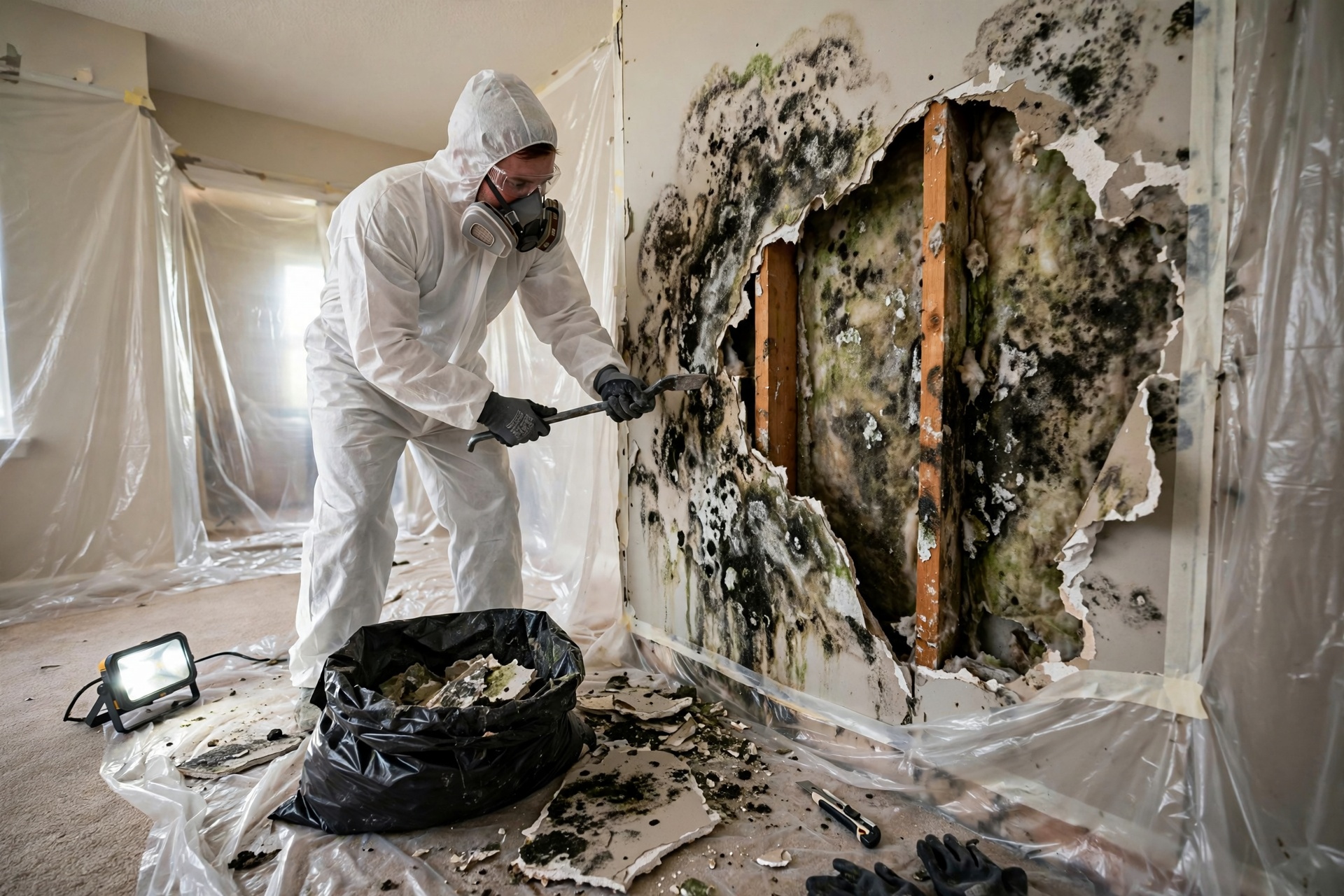
Mount Juliet's humid subtropical climate with hot summers and mild winters drives persistent moisture in Wilson County homes, especially in neighborhoods like Providence and Beckwith where many properties sit on clay-heavy soils that hold water after storms. Mold-damaged drywall removal begins with isolating the affected sections to prevent spore spread into HVAC systems common in single-story ranch houses built from the 1980s onward. Technicians cut at least 18 inches beyond visible growth, bag the material on-site, and haul it directly to approved disposal sites rather than risking cross-contamination during transport through Providence Marketplace traffic corridors.
Older housing stock near Charlie Daniels Park often features paper-faced drywall that wicks moisture from roof leaks or poor grading, creating hidden colonies behind baseboards. Removal crews use negative air machines and HEPA filtration to maintain containment, then treat exposed studs with antimicrobial solutions before any new material goes in. Homeowners in Lebanon-facing areas frequently discover damage only after musty odors reach living spaces, making early inspection critical to avoid larger structural repairs.
Wilson County building practices sometimes leave insufficient vapor barriers in crawl spaces, allowing humidity to migrate upward and saturate lower drywall courses. The removal process accounts for this by checking adjacent rooms and ceilings, then documenting moisture readings for insurance claims. Crews based at 113 Bear Xing respond within hours because summer thunderstorms can turn minor leaks into widespread issues overnight.
Technician insight
In Mount Juliet, the thing that catches most people out with mold-damaged drywall removal is how quickly summer humidity and clay soils push moisture up from the slab into lower drywall in Beckwith homes built before vapor barriers became standard.
Hidden growth after roof leak near Charlie Daniels Park
A Providence homeowner noticed a musty smell weeks after a storm. Inspection found saturated drywall behind a closet that had wicked moisture from the attic. Crews removed two full sheets, treated the studs, and contained the area so the family could stay in the house during the work.
Mold-damaged Drywall Removal Services We Offer
✓Containment Barrier Installation
Plastic sheeting and negative air setups seal off rooms in Providence homes to stop spores from migrating through open floor plans during removal.
✓HEPA Vacuum and Debris Removal
Industrial vacuums capture fine dust from cut drywall edges before bagging, protecting air quality in Beckwith residences near busy roads.
✓Stud Treatment and Antimicrobial Application
Exposed framing receives EPA-registered solutions after drywall removal to address residual growth common in humid Wilson County basements.
✓Moisture Mapping and Documentation
Infrared scans and readings identify hidden wet zones behind remaining walls so repairs target the full scope in Mount Juliet properties.
✓Disposal and Hauling Coordination
Mold-laden drywall is double-bagged and transported to permitted landfills, avoiding improper dumping that could affect local waterways.
Mold-damaged Drywall Removal Cost in Mount Juliet, TN
| Service | Typical Range | What Affects It |
|---|---|---|
| Small bathroom or closet section | $450–$850 | Single wall, easy access, no hidden spread |
| Standard bedroom wall | $900–$1,600 | Includes containment and stud treatment |
| Multiple rooms or ceiling work | $1,800–$3,200 | Larger jobs in Providence homes with HVAC involvement |
| Emergency after-hours response | Included | 24/7 service from 113 Bear Xing |
Ranges are typical for Mount Juliet, TN and confirmed with an exact written quote before any work starts.
How it works
- 1
Initial Assessment
Technicians inspect visible damage and use moisture meters in Providence and Beckwith homes to map the full extent before any cutting begins.
- 2
Containment Setup
Plastic barriers and air scrubbers isolate the work zone to protect the rest of the house from airborne particles.
- 3
Drywall Removal
Affected sections are cut, bagged, and removed while maintaining negative pressure throughout the job.
- 4
Surface Treatment
Exposed studs receive antimicrobial application and final HEPA vacuuming before the team exits.
- 5
Final Clearance
Post-removal inspection confirms no active growth remains and provides documentation for Wilson County records.
Pricing
Pricing varies by square footage, accessibility, and whether hidden moisture extends into adjacent rooms common in older Wilson County homes.