2026-10-19 ·
Local Humidity Levels And Mold Growth In Mount Juliet
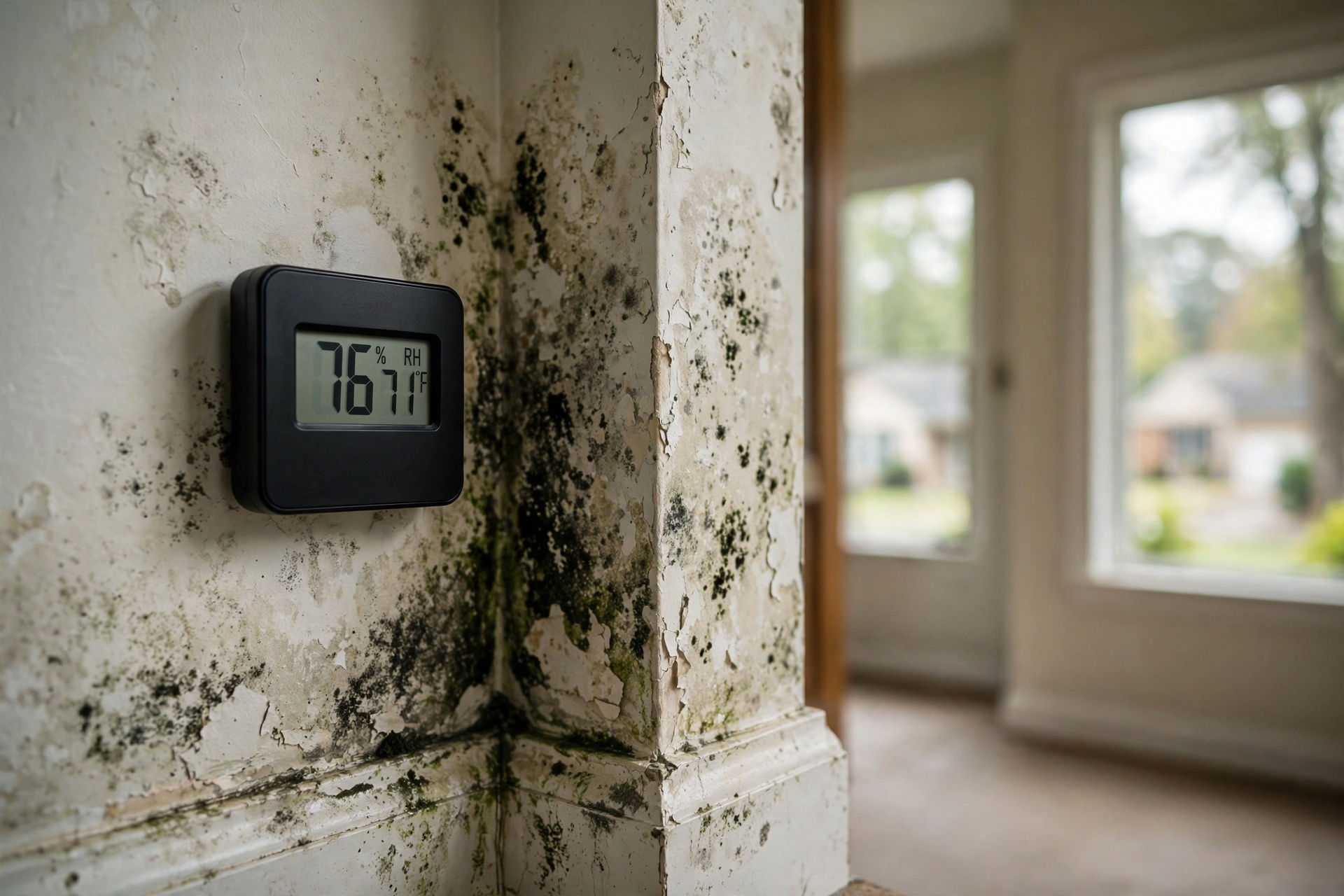
Mount Juliet's humid subtropical climate keeps outdoor relative humidity above 60% for much of the year, and indoor levels in Wilson County homes often match or exceed that threshold long enough for mold remediation to become necessary within 24 to 48 hours of a moisture event.
Summer Humidity Spikes in Wilson County
Mount Juliet experiences extended stretches from May through September when dew points climb into the upper 60s and low 70s. Homes built before 1990 in Beckwith and around Charlie Daniels Park frequently lack modern vapor barriers, so warm moist air infiltrates wall cavities and attics. Once indoor relative humidity holds above 65% for more than a day, spores on drywall paper or insulation begin germinating. Providence Marketplace shoppers notice the same sticky air inside their vehicles after parking, a reminder that the same moisture load enters nearby single-story ranches and two-story homes on concrete slabs. Local crews see the highest call volume after multi-day rain events when attic insulation stays damp and HVAC systems struggle to keep up.
Winter Moisture Retention and Mild Temperatures
Wilson County's mild winters rarely drop below freezing for long, so crawl spaces under homes in Providence stay above 50°F even in January. This prevents pipes from freezing but allows soil moisture to evaporate continuously into the joist bays. When residents close windows to conserve heat, relative humidity indoors can climb back above 55% and linger. Older homes near Lebanon Road show condensation on ductwork running through unconditioned crawl spaces, creating perfect conditions for mold on the underside of subfloors. Checking these hidden areas before spring prevents larger issues later.
How Local Terrain and Housing Stock Affect Growth
Rolling terrain around Mount Juliet means many lots slope toward foundations, directing rainwater against basements in neighborhoods like Beckwith. Post-2000 construction in Providence often includes finished basements with carpet and drywall that trap moisture when sump pumps fail during heavy summer storms. In contrast, 1970s homes near Silver Springs have vented crawl spaces that pull in humid air from the surrounding woods. Both styles require different approaches: slab homes need dehumidification tied to the HVAC, while crawl spaces benefit from sealed vapor barriers and continuous exhaust.
Monitoring and Controlling Humidity Year-Round
Place digital hygrometers in the basement, main living area, and master closet to track daily swings. Target indoor levels between 45% and 55% RH during summer and no higher than 50% in winter. When readings stay elevated after a storm, running a whole-house dehumidifier tied to the HVAC can drop levels within hours. Residents in Providence who installed these units after 2020 report fewer musty odors compared with neighbors relying on portable units alone. For homes already showing visible growth, professional mold remediation followed by moisture control after mold removal addresses both the colonies and the underlying humidity source.
When to Inspect Basements and Crawl Spaces
If humidity logs show repeated spikes above 60% after rainfall, schedule a targeted inspection of the lowest levels. How to check for mold in Mount Juliet basements outlines the tools and visual cues that reveal hidden colonies behind baseboards or on HVAC registers. Similarly, preventing mold in Mount Juliet crawl spaces during winter explains how to seal vents and add dehumidification before the next warm season returns. These steps keep Wilson County homes drier and reduce the frequency of full-scale mold removal projects.