2026-10-19 ·
Dealing With Mold After Mount Juliet Flooding Events
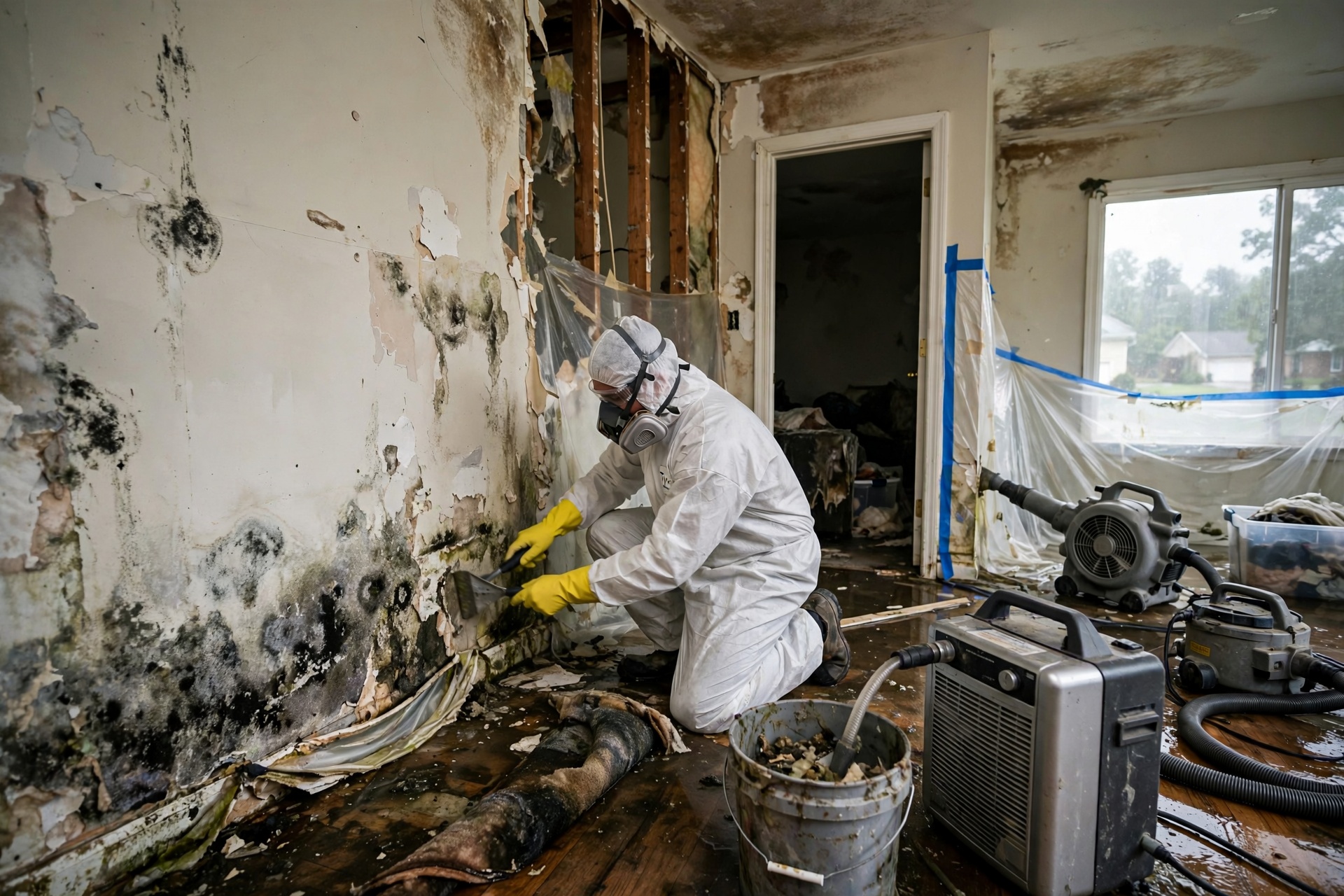
After flooding in Mount Juliet, mold colonies typically begin forming within 24 to 48 hours in damp materials. Homes in Providence and Beckwith face heightened risks because many properties sit on clay-heavy soils that retain moisture longer after heavy rains from Wilson County storms.
Why Local Flooding Triggers Mold Growth
Mount Juliet's humid subtropical climate brings hot summers and mild winters that keep humidity levels elevated year-round. When floodwaters recede from events tied to nearby Nashville runoff or Lebanon-area creeks, residual moisture lingers in crawl spaces and basements common to 1980s-2000s housing stock in Beckwith. This environment allows spores to colonize drywall, insulation, and subfloors faster than in drier regions. Terrain slopes toward the Cumberland River also direct water into lower-lying Providence yards, saturating foundations that lack modern vapor barriers. Residents notice musty odors within days when dehumidification is delayed.
Assessing Damage in Flood-Affected Areas
Start by documenting water lines on walls and checking for hidden saturation behind cabinets in Providence homes. Use moisture meters on concrete slabs common in Wilson County builds to locate pockets that standard fans miss. Many Beckwith properties built before 1995 have older HVAC systems that circulate spores if ducts remain wet. Mold issues in Mount Juliet homes near the Cumberland River often stem from similar river-adjacent flooding patterns. Avoid disturbing materials until professional testing confirms extent, as disturbing dry mold releases particles into living spaces.
Steps for Effective Post-Flood Drying
Remove standing water immediately with extraction equipment rated for 50 gallons per minute or higher. Run commercial dehumidifiers set to 45-50% relative humidity for at least 72 hours in affected rooms. Focus on attics and crawl spaces in Providence homes where poor ventilation traps humidity after summer storms. Replace saturated insulation and carpet padding rather than attempting to dry them, since these materials hold moisture for weeks. How to check for mold in Mount Juliet basements provides targeted inspection points for slab-on-grade homes typical here.
When Professional Remediation Becomes Necessary
Call experts once visible growth exceeds 10 square feet or when odors persist after drying attempts. Post-water-damage mold remediation protocols include HEPA air scrubbing and antimicrobial application on structural wood in Beckwith crawl spaces. Technicians contain work areas with plastic sheeting to prevent cross-contamination into unaffected zones. In Wilson County, where power outages during storms complicate homeowner drying, 24/7 response prevents secondary damage that raises repair costs. Technicians also address HVAC components that floodwaters can contaminate through return vents.
Long-Term Moisture Control After Events
Install vapor barriers and improve grading around foundations in Providence to divert future runoff. Add exhaust fans in bathrooms and laundry rooms to maintain indoor humidity below 55% during mild winters. Schedule annual inspections of sump pumps and French drains common in Beckwith terrain. These measures reduce recurrence rates in homes that have already experienced one flood cycle. Consistent monitoring after each Wilson County storm keeps mold from returning in wall cavities or under flooring.